01 / Starting point
One desk may support colour review, screen work, sketching, video calls and quiet evening reading. A single light rarely serves all of those conditions equally. The useful approach is to separate accurate task light from ambient light, then control each layer.
Task lighting should illuminate the working plane without reflecting into the display or eyes. Ambient lighting should reduce the contrast between a bright screen and a dark room. Portable lamps can create atmosphere, but they should not become the only source used to judge colour-sensitive materials.
02 / Comparison frame
What to compare before choosing.
Direction
Check where the light falls, what the shade blocks and whether the source appears directly in the eye or display.
Dimming
A useful range matters more than many fixed modes. Controls should be reachable without disturbing the setup.
Colour quality
For visual work, credible colour-rendering information and consistent white balance are more useful than extreme colour-temperature claims.
Physical fit
Monitor depth, webcam position, desk edge and lamp base all affect whether a light fits the actual workstation.
03 / Fit check
Know when the object helps—and when it does not.
- Workstations used in both daylight and evening conditions
- Screen-based work combined with paper, samples or keyboards
- Rooms that need a portable secondary light without new wiring
- The light conflicts with a webcam, display housing or monitor control
- A warm decorative lamp is expected to provide colour-critical evaluation
- Charging, power or battery replacement does not fit the everyday routine
04 / Buying brief
Five checks to make before opening a listing.
- 01
Identify the task plane: keyboard, sketchbook, sample board or reading area.
- 02
Observe existing reflections on the monitor before adding another source.
- 03
Check lamp and display dimensions, including bezels, curves and camera position.
- 04
Use separate settings for visual review and relaxed evening light.
- 05
Place ambient light so the wall or room receives light without creating a bright point in the field of view.
05 / Field notes
Details that change the everyday result.
Brightness is relational
A light can feel harsh because the surrounding room is dark. Raising ambient light may be more comfortable than dimming the task until it is unusable.
Warm light has a role
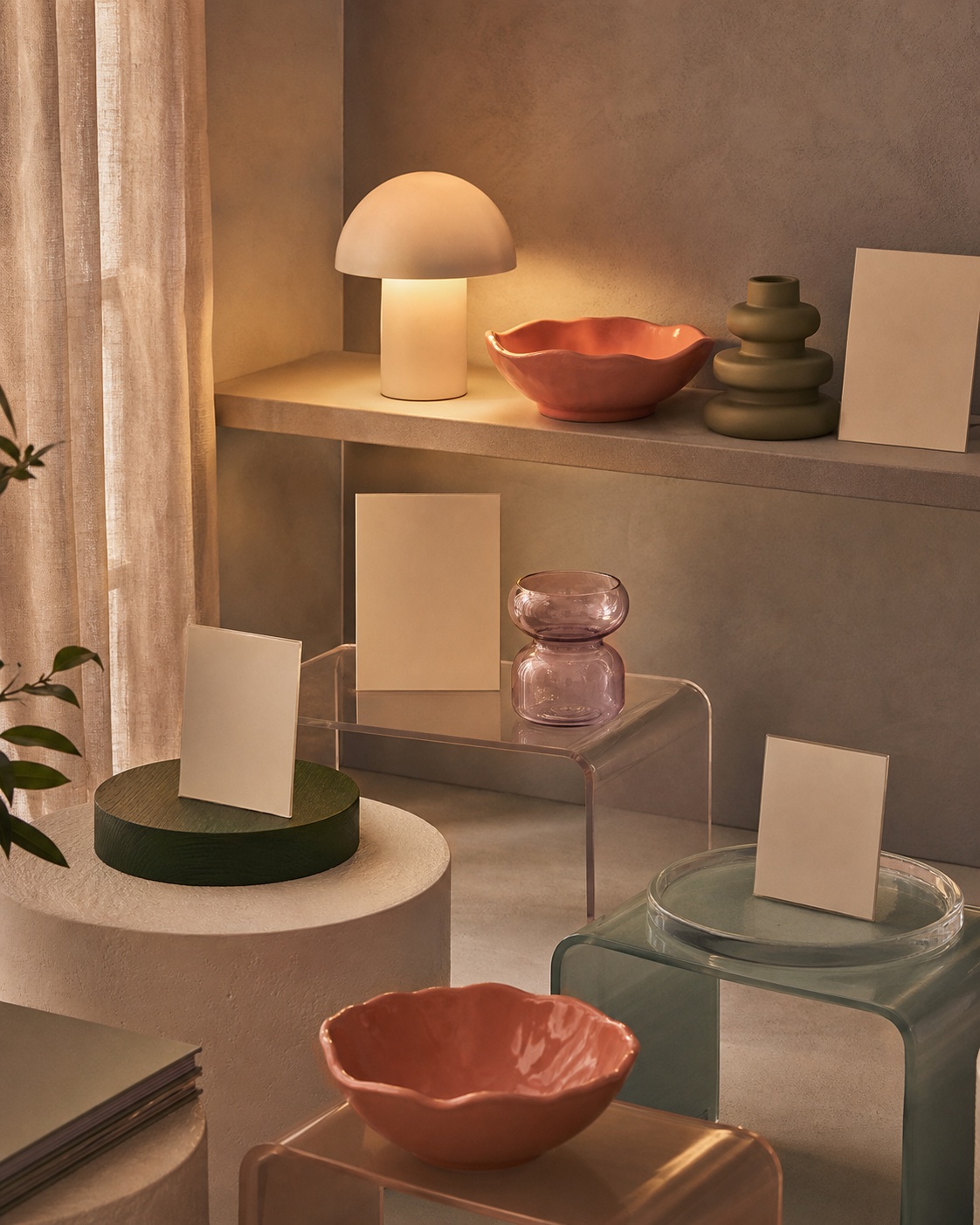
Warm portable lamps can signal a shift out of colour-critical work and give shelves or materials a more relaxed evening presence.
The screen is already a light
Arrange the room so the display is one layer within the environment, not the only luminous surface facing the viewer.
06 / Auren decision rule
Choose for the real sequence.
Build two controllable layers before buying many fixtures: one directed task source and one softer ambient source. Each should have a clear job.
Lighting feels intentional when it supports both the work and the transition away from it.